Allbirds Just Became an AI Company. And the Market Lost Its Mind.
- Apr 2026
- 280
- 0
Let me start with what happened, because the facts alone are almost comedic.
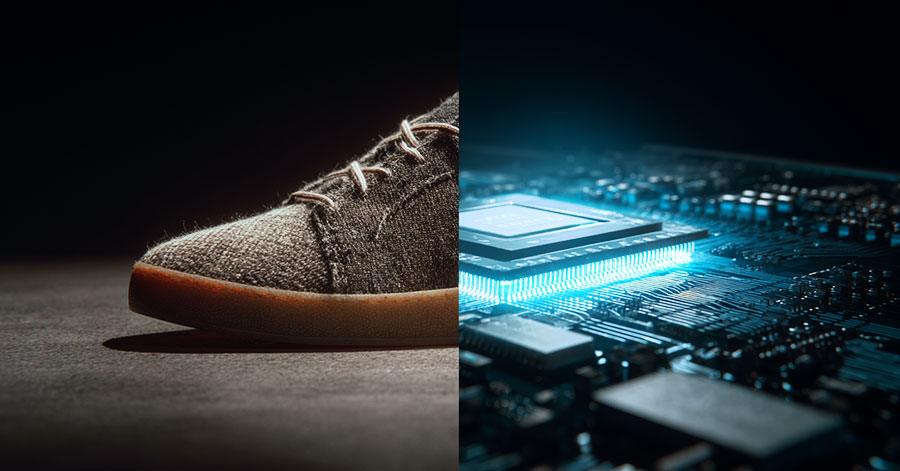
Allbirds - the San Francisco shoe brand that spent a decade telling Silicon Valley tech workers they could save the planet one merino wool sneaker at a time - has pivoted to artificial intelligence. Not pivoted in the metaphorical sense. Fully, completely, sell-the-shoe-business-and-buy-GPUs pivoted.
The stock, which was trading under $3 on Tuesday, closed at roughly $17 on Wednesday. A 582% single-day gain. The market cap went from $21.7 million to $159 million overnight.
The company is renaming itself NewBird AI.
I have been watching business long enough to know that moments like this deserve more than a laugh. They deserve a closer look. Because what just happened with Allbirds is simultaneously absurd, instructive, and a remarkably clean mirror held up to the moment we are all living in.
First, the Facts
Here is the timeline of how a shoe company became an AI company in about thirty days:
In late March 2026, Allbirds sold its entire footwear brand and assets - the shoes, the brand name, the stores, everything - to American Exchange Group, the company behind Aerosoles and Ed Hardy, for $39 million. The Allbirds sneaker, once worn by Barack Obama and Ben Affleck, now belongs to the people who also own Ed Hardy. Let that sit for a moment.
What Allbirds retained was the public company shell - still trading on Nasdaq under the ticker BIRD. A listed vehicle with no business but with a balance sheet and, crucially, a stock market listing.
Then, on April 15, 2026, the company announced it would use that shell to become NewBird AI - a "fully integrated GPU-as-a-Service and AI-native cloud solutions provider." In plain English: they plan to buy high-performance AI compute hardware and rent it out to companies that cannot get enough computing power from the big cloud providers.
To fund this, they announced a $50 million raise from an undisclosed institutional investor, expected to close in Q2 2026. Stockholder approval is needed at a meeting scheduled for May 18. The market reacted as if someone had announced the cure for ageing.
The Business Logic, Which Is Actually Not Crazy
Here is the part that gets lost in the noise of the 582% headline: the underlying thesis is not ridiculous.
AI compute is genuinely constrained. GPU procurement lead times for high-end hardware are lengthening. North American data centre vacancy rates are at historic lows. Computing capacity coming online through mid-2026 is reportedly already fully committed. There is a real and growing gap between what enterprises, AI developers, and research organisations need to build and run AI, and what the spot markets and hyperscalers can reliably supply.
Buying GPU hardware and leasing it out on long-term arrangements to fill that gap is a legitimate business model. Understanding why AI efficiency gains keep driving more demand is essential context here - the compute gap is structural, not cyclical. It is not a world-changing idea. It is not what Nvidia does. But it is a real service with real demand.
The problem is not the idea. The problem is the execution risk. Allbirds - now NewBird AI - has zero demonstrated expertise in AI compute infrastructure. Zero. The team that spent fifteen years figuring out how to make shoes from merino wool is now going to build a GPU leasing operation. That transition requires talent, relationships, and operational capability that do not currently exist inside this organisation.
That is not fatal. It is buildable. But it is not a 582% story. It is a "let us see in eighteen months" story.
The Part That Actually Bothers Me
Buried in the regulatory filings is a detail that I find more interesting than the stock move.
Allbirds was a certified B Corporation. It was founded with a legal commitment to environmental conservation built into its corporate charter. The entire brand was constructed around sustainability - "sustainability in every step" was not just a tagline, it was the company's reason for being. It is what justified the premium pricing. It is what made Silicon Valley tech workers feel good about spending $130 on wool trainers.
NewBird AI plans to ask shareholders to approve a charter amendment that removes all references to the company being operated for environmental conservation public benefit.
Which makes sense, because running AI compute infrastructure is one of the most energy-intensive activities on earth. The data centres required to power the GPU leasing model NewBird AI is proposing consume extraordinary amounts of electricity and generate substantial heat. AI's complex relationship with climate change is one of the defining tensions of the current technology era. This is not a green business. It is essentially the opposite of what Allbirds built its entire identity around.
I am not making a moral argument here. Companies pivot. Circumstances change. The shoe business was genuinely failing - sales fell from $298 million in 2022 to $152 million in 2025, nearly 50% in three years. The sustainability brand did not save it. The B Corp certification did not save it.
But I do think it is worth naming clearly: the company that told you shopping sustainably could change the world has now pivoted to one of the least sustainable technology businesses available. The distance between those two positions is not a pivot. It is a full reversal.
What This Tells Us About the Market Right Now
The most quoted line on this story came from Steve Sosnick, chief strategist at Interactive Brokers: "The motivation behind the corporate pivot is sensible, the market reaction less so. A 6x or 7x move for a company that is literally ditching its prior business model for one in which it has no demonstrated expertise says quite a bit about market froth and investor willingness to chase moves."
He is right. And the historical parallel being cited everywhere is instructive. In 2017, at the peak of cryptocurrency fever, Long Island Iced Tea rebranded as Long Blockchain Corp. The stock jumped 275% in a day. The Nasdaq delisted it the following year when the Bitcoin fever broke.
I am not predicting the same outcome for NewBird AI. The AI infrastructure market is real and durable in a way that the 2017 blockchain moment arguably was not. But the mechanism - a distressed company with a listed shell, attaching itself to the hottest word in technology and watching retail investors pile in - is structurally identical. We have already seen top leaders abandoning established roles to chase AI ventures, and this is the micro-cap version of that same gravitational pull.
What the Allbirds moment tells me is this: we are in a period when the word "AI" in a press release is worth several hundred percent to a micro-cap stock, regardless of whether the business behind the announcement is credible, staffed, or operational. That is a useful data point. It is not a healthy one. Society needs to stay vigilant during rapid tech shifts precisely because of market dynamics like this.
What I Will Be Watching
The May 18 stockholder vote is the first real test. If the asset sale and the new direction are approved, NewBird AI will begin deploying the $50 million raise into GPU hardware. The question then becomes: can they actually build the operational infrastructure to lease that compute reliably, attract and retain customers, and generate revenue before the raise runs dry?
The second test is the talent question. Who is running this? The AI compute infrastructure business requires a completely different skill set from anything that existed inside Allbirds. The announcements so far have been light on management detail.
The third test, and the one that will matter most to long-term investors, is whether the GPU leasing model can scale before larger, better-capitalised players close the compute gap that NewBird AI is trying to fill. Hyperscalers like Amazon are aggressively expanding AI infrastructure - if they resolve their capacity constraints faster than expected, the market opportunity narrows significantly.
The Bigger Picture
Here is what I keep coming back to.
Allbirds was, at its peak, a genuinely interesting brand story. A company that understood a specific consumer - the values-driven, environmentally conscious, tech-adjacent urban professional - and built a product and identity that resonated deeply with that person. The shoes were not extraordinary. The brand was.
The failure was not the idea. The failure was the execution - the overexpansion, the cost base that outgrew the revenue, the inability to maintain brand exclusivity at scale.
That story - great brand idea, flawed execution, eventual collapse - is one of the defining consumer business stories of the 2020s. It happened to Allbirds. It happened to others. It will happen to more. The AI revolution's defining business trends in 2025 are separating companies that execute from those that merely announce.
What comes after that story, in 2026, apparently, is: sell the brand, keep the stock listing, announce an AI pivot, watch the shares go up 582%.
Whether NewBird AI becomes a real business or a footnote in the history of AI-era market mania is a question only time answers. Humans remain irreplaceable in navigating an AI-driven world - and that includes the judgment calls that separate genuine transformation from clever rebranding. Why VCs are betting big on AI application startups gives you a sense of where serious capital is actually going - and it is not into distressed shoe companies with a freshly minted GPU strategy.
But the day it happened, April 15, 2026, told you everything you need to know about where investor attention and market psychology currently live.
The shoe is dead. Long live the GPU.
The Numbers
| Metric | Detail |
|---|---|
| Allbirds IPO | November 2021, valued at $4 billion |
| Market cap before announcement | $21.7 million |
| Market cap after announcement | $159 million |
| Single-day stock gain | 582% |
| Stock price before | Under $3 |
| Stock price after | Approximately $17 |
| Peak intraday | $23 |
| Current vs IPO value | Still more than 90% lower than 2021 listing |
| Revenue 2022 | $298 million |
| Revenue 2025 | $152 million (decline of approximately 49%) |
| Footwear assets sold to | American Exchange Group (Aerosoles, Ed Hardy) for $39 million |
| New name | NewBird AI |
| New business | AI compute infrastructure, GPU procurement and leasing |
| Raise announced | $50 million convertible financing facility |
| Stockholder vote | May 18, 2026 |
| Ticker | BIRD (Nasdaq), unchanged |

Comments
No comments yet.
Add Your Comment
Thank you, for commenting !!
Your comment is under moderation...
Keep reading blog post