Bhajan Clubbing - When Faith Gets a Sound System
- Feb 2026
- 289
- 0
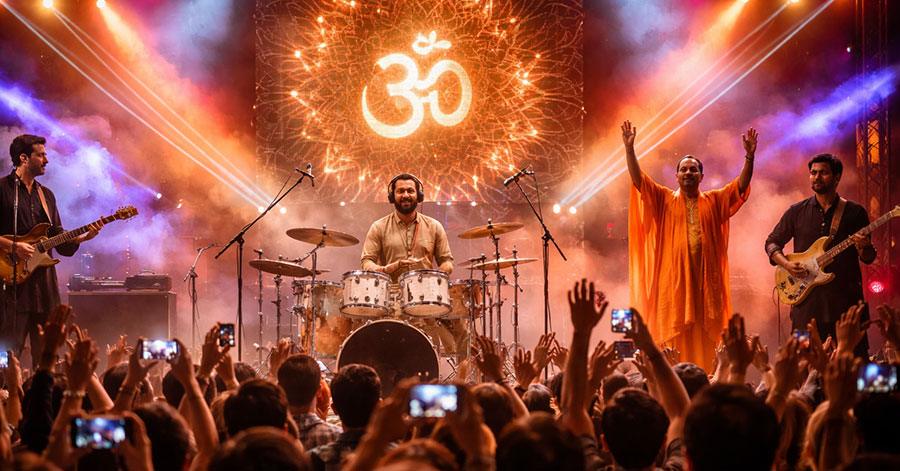
I Grew Up Inside the Rhythm
I didn't just attend bhajans. I grew up playing in them.
For as long as I can remember, my hands have rested on a dholak, tabla, or pakhawaj. Rhythm was my entry into devotion. Before I understood theology, I understood tempo. Before I read scripture, I learned how to listen.
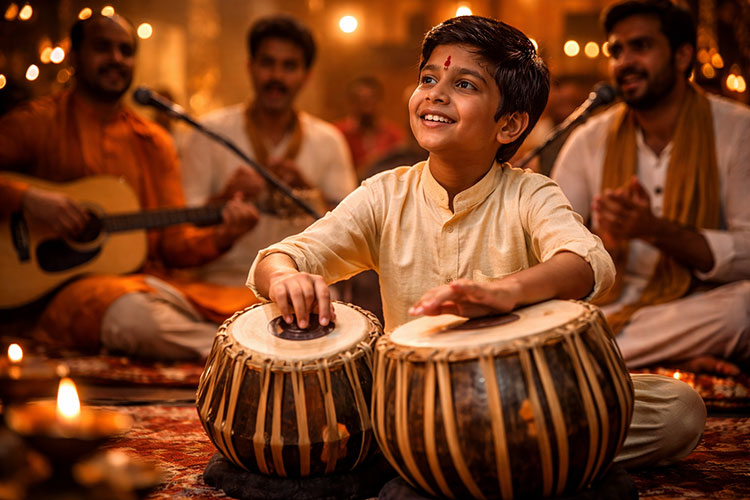
In the bhajans of my childhood, percussion wasn't performance - it was responsibility. My job was not to dominate the room but to hold it together. If the singing grew emotional, I softened. If energy rose, I gently lifted the pace. The beat served the bhava.
There was no stage. No spotlight. No applause.
Only participation.
A bhajan wasn't entertainment. It was surrender.
Then I Stepped Into Amplified Devotion
Recently, I attended what was called a "Bhajan Night." It felt closer to a music festival.
LED walls. Laser beams. Massive speakers. DJs remixing sacred chants. A charismatic spiritual leader commanding the stage like a headliner. Phones raised high, livestream counters ticking.
The circle had become a stage.
The chorus had become a spectacle.
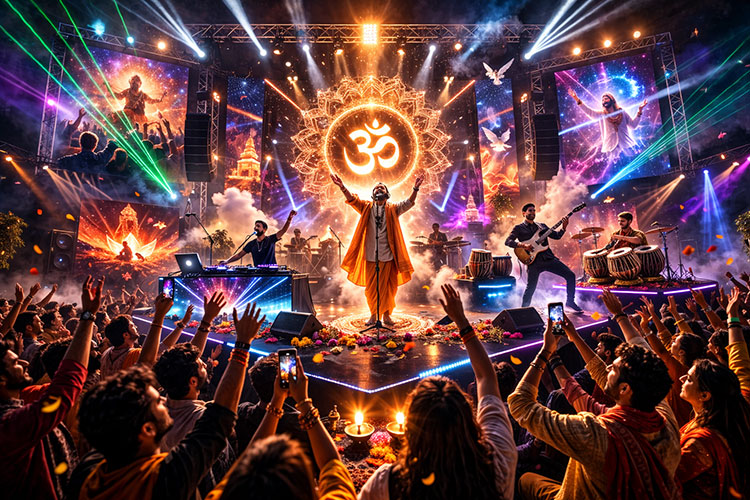
This is what many now call Bhajan Clubbing - devotion scaled, branded, amplified. In many ways, it mirrors the broader trend of vibe-driven movements shaping modern culture.
And as someone who has spent decades inside the rhythm section, I found myself asking: Is this dilution - or evolution?
Public Ecstasy Has Always Existed
Devotion has never been purely silent.
The Bhakti saints sang in the streets. Sacred sound has always been embodied. Music has long been a mystical technology - repetition quiets thought, rhythm aligns breath, collective singing dissolves isolation.
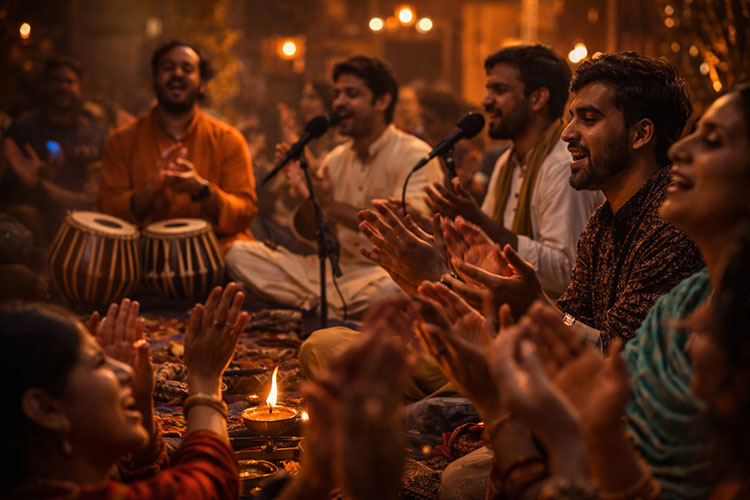
Even in my own experience, when fifty people lock into the same beat, something shifts. The room feels different. Time stretches. Ego softens.
That alchemy doesn't depend on volume.
But scale changes texture.
What's Changed Is the Energy Curve
In traditional bhajans, percussion followed devotion. The rhythm responded organically to the emotional temperature of the room.
In many large-scale events today, devotion follows the beat.
Crescendos are engineered. Drops are timed. Energy is designed like a concert setlist. The guru becomes performer. The stage faces the audience. It's a tension similar to what we see in debates around humans versus AI in an automation-driven world - what happens when the organic is replaced by the engineered?
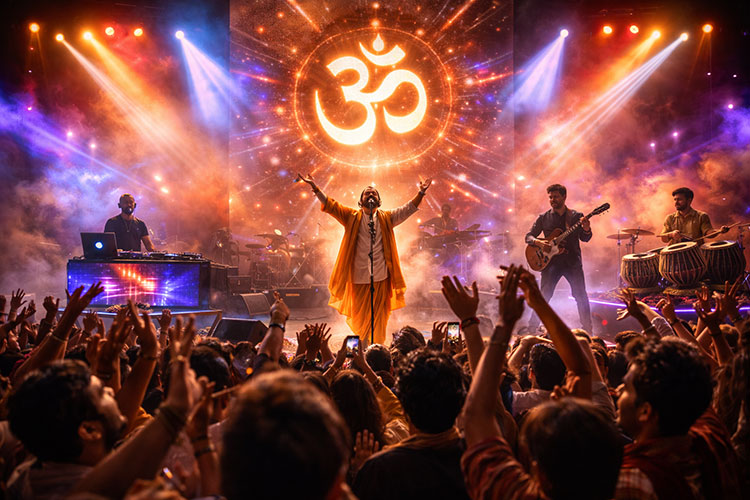
And yet - young people are showing up. They're singing. They're feeling something. They're experiencing collective spiritual energy in ways that feel contemporary and accessible. This new wave of participation is part of India's booming creator economy, where culture, community, and content converge in powerful new ways.
That matters.
My Next Step - Bringing Drums and Soft Rock Into Bhajan
Here's the honest truth: I don't want to stand outside this evolution and critique it from a distance.
I want to step into it consciously.
My go-to instrument now is the drum kit. The language of groove, soft rock textures, layered rhythms - that excites me. With my band Chakram, I'm exploring what happens when traditional bhajan meets drums, subtle rock progressions, bass lines, ambient guitar, and other Western instruments.
Not to overpower the chant.
Not to commercialize it.
But to expand its sonic vocabulary.
I've spent years understanding the grammar of traditional percussion. I know when to restrain. I know how rhythm can either dominate or dissolve. The challenge now is this:
Can we introduce drums without losing devotion?
Can a soft rock undercurrent carry bhakti without converting it into just another gig?
With Chakram, that's the experiment.
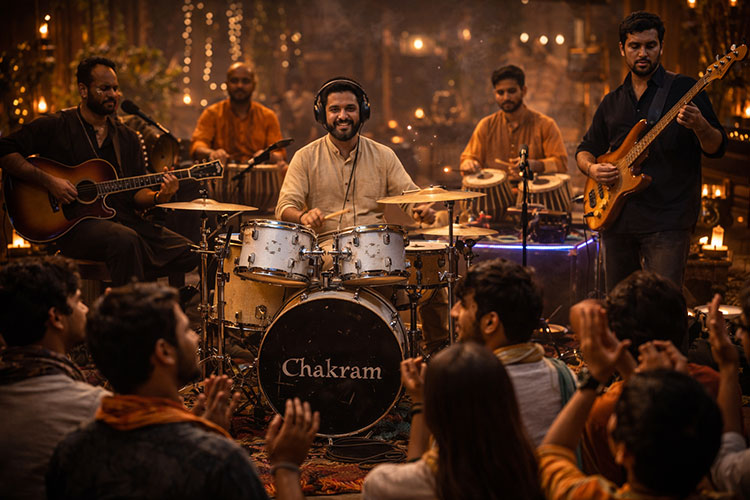
We're not trying to turn bhajan into a nightclub anthem. We're trying to create a bridge - between the circle and the stage, between heritage and contemporary sound, between surrender and structure. It's a form of future-backward thinking applied to devotional music - honouring the past while consciously shaping what comes next.
If done thoughtfully, Western instruments don't have to dilute sacred music. They can serve it - just as the dholak once did.
The question is always the same: who is leading whom?
Is the rhythm serving the chant?
Or is the chant serving the rhythm?
Experience vs Transformation
Large devotional gatherings can create powerful experiences. Rhythm still synchronizes breath. Bass still unites bodies. Collective singing still reduces loneliness.
But experience is not the same as transformation.
The real test of any bhajan - traditional, amplified, or fusion - is what remains after the music stops. Does it soften you? Does it make you kinder? Does it quiet something restless inside? Much like Fauja Singh's journey of finding purpose through discipline, lasting impact comes not from spectacle but from sustained inner practice.
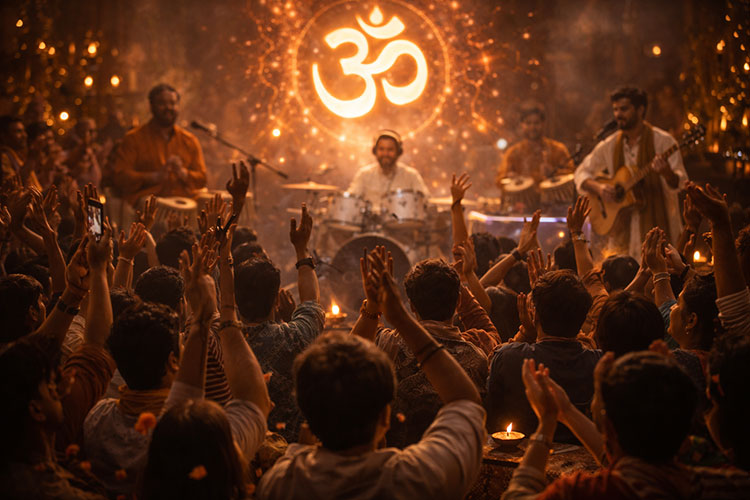
If drums, guitars, and layered arrangements can help carry that inward movement, then I'm willing to experiment.
But I remain cautious.
Because volume is not depth.
Complexity is not transcendence.
Energy is not surrender.
Where I Stand
I don't romanticize the past blindly. Nor do I worship the new just because it's loud.
I stand somewhere in between - with my hands on a drum kit, my training rooted in tabla and pakhawaj, and my heart still remembering those dawn bhajans where the simplest theka felt sacred. The debate between whether technology is a blessing or a beast echoes here too - every powerful tool demands intentionality.
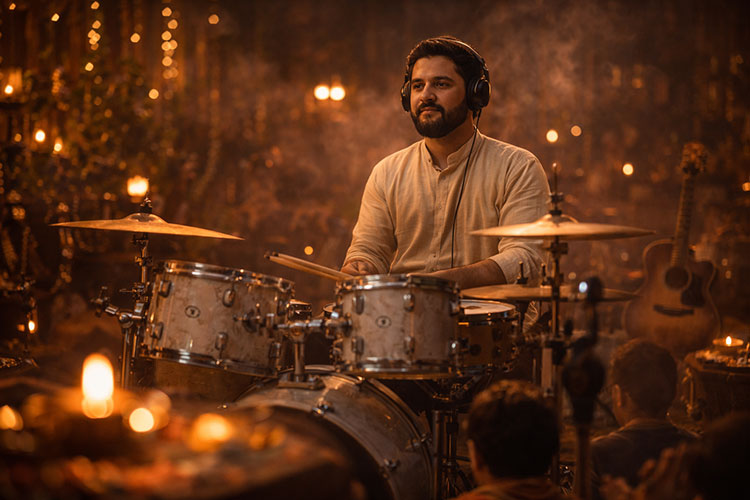
With Chakram, I want to explore a devotional soundscape that respects silence as much as sound. That understands when to build and when to disappear. It's the same philosophy that drives heritage institutions embracing innovation thoughtfully - preserving the soul while evolving the form.
Because the most powerful moment in any bhajan isn't the crescendo.
It's the space just after it -
when the last note fades,
and something inside you is quieter than before.
That's the space I'm still playing for.
Comments
No comments yet.
Add Your Comment
Thank you, for commenting !!
Your comment is under moderation...
Keep reading blog post