How I'd Rebuild My Running - Smarter, Stronger, and Without Burning Out
- Mar 2026
- 238
- 0

I've realised something about fitness over time.
You don't lose it once.
You lose it multiple times.
Because life doesn't care about your routine.
Work picks up. Travel happens. Priorities shift.
And before you know it, you're not where you used to be.
Running is one of those things that exposes this brutally.
You step out expecting your old rhythm…
and your body humbles you instantly.
And that's where most people make the mistake.
They try to go back.
The Shift That Changed It For Me
I stopped thinking:
"How do I get back to where I was?"
And started thinking:
"How do I train the version of me that exists today?"
That one shift removes frustration.
Because the truth is - your body today is different.
And it deserves a different approach.
1. Start Slower Than Your Ego Allows
This is the hardest part.
Because mentally, you remember your old pace.
Physically, you're not there.
And if you try to bridge that gap too quickly, you don't accelerate progress - you just invite injury.
If I had to simplify it:
Go 30-40% slower than what you think you should.
Or use something more structured:
Increase your weekly load by ~10% max.
It feels conservative.
But I've learnt this the hard way - aggressive starts lead to forced stops. If you're new to pacing yourself right, this guide to smarter running with better form is worth a read.
2. Build Strength - Otherwise You'll Break Again
Earlier, I used to think running = just running.
Now I see it differently.
Running is output.
Strength is infrastructure.
If the base is weak, the output collapses.
So if I were restarting, I'd make this non-negotiable:
- Core
- Glutes
- Lower body strength
Nothing fancy.
- Squats
- Lunges
- Planks
- Calf raises
Even 10-15 minutes.
But consistently.
Because injuries don't come from one bad run.
They come from weak systems under repeated load.
A solid warm-up routine before every run helps protect those systems too.
3. Recovery Is Part of Training (Not a Break From It)
This is something most people intellectually know - but don't follow.
If your legs feel off, heavy, or strained - pause.
Not because you're lazy.
Because you're thinking long-term.
Earlier, I used to push through.
Now I see recovery as compounding.
One extra day of rest today can save you two weeks of forced inactivity later.
That's a trade I'll take every time.
4. Timing Matters More Than We Admit
This is something I've started paying attention to more.
Not just what you eat - but when.
What's worked for me:
- Finish your last meal by around 7-8 pm - Late-night eating and good recovery don't go well together.
- Keep a clean eating window (10-12 hours) - Nothing extreme - just giving your system time to reset.
- Avoid random late-night snacking - Most of it is boredom, not hunger.
- Keep dinners lighter than lunches - You don't need heavy fuel when your day is winding down.
This alone improves how you feel on your next run. If you want to go deeper on this, these five eating habits for a longer and healthier life are a great starting point.
5. The First Few Weeks Will Feel Bad - That's the Point
There's no way around this.
You won't feel strong.
You won't feel fast.
And you'll question whether you've lost it.
You haven't.
You're just rebuilding.
I've started reframing this phase as:
"This is where the system is being rebuilt."
Because once you push through this phase, things start clicking again. Reading about how to make running a lifetime habit helped me stay grounded during this exact phase.
6. You're Not Starting From Scratch (Even If It Feels Like It)
This is important.
Your body remembers.
Not perfectly - but enough.
Which is why comebacks are always faster than first starts.
If you stay consistent.
That's the only condition.
Need something to aim for? Training for preparing and completing a half marathon is one of the most effective ways to stay committed through a comeback. Even the experience of running in a real race event like the Navy Half Marathon can reignite the fire you thought you'd lost.
What I'd Focus On (If I Had to Do This Again)
Not pace.
Not distance.
Not comparisons.
Just:
- Showing up
- Building strength
- Respecting recovery
Everything else is noise.
Final Thought
I don't look at fitness as a peak anymore.
I look at it as a system I return to.
Again and again.
Each time, a little smarter.
Because the real goal isn't to get back quickly.
It's to build something you don't keep losing.
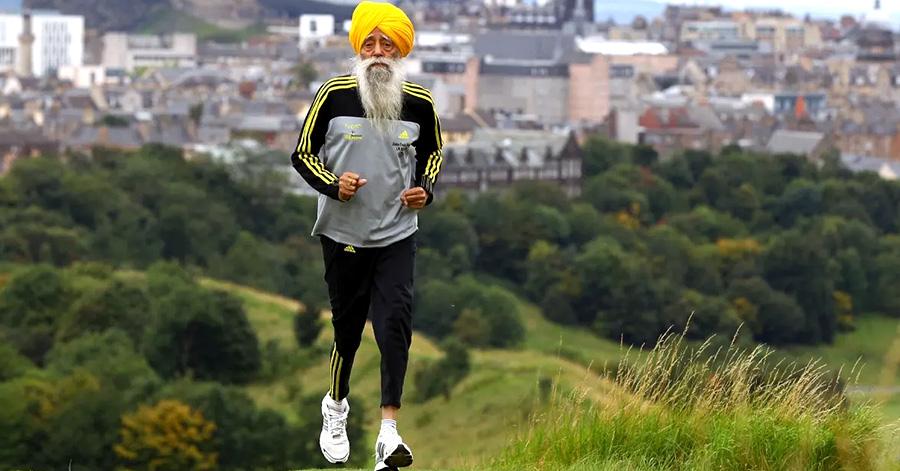
And if you ever need proof that it's never too late to rebuild - look no further than Fauja Singh, the Turbaned Tornado who started at 89.


Comments
No comments yet.
Add Your Comment
Thank you, for commenting !!
Your comment is under moderation...
Keep reading blog post